Course Features
Price
Study Method
Online | Self-paced
Course Format
Reading Material - PDF, article
Duration
3 hours, 35 minutes
Qualification
No formal qualification
Certificate
At completion
Additional info
Coming soon
- Share
Overview
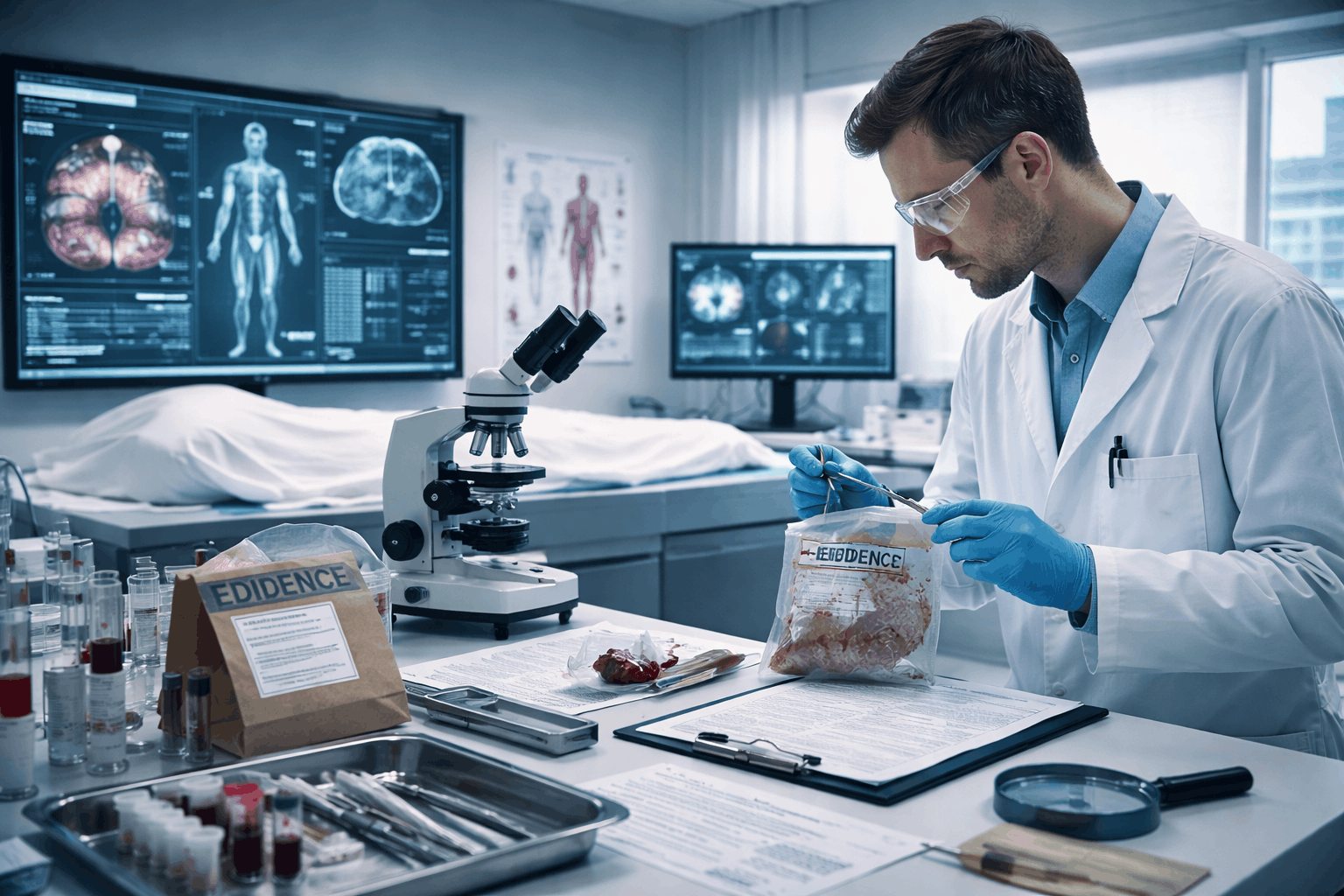
Forensic Pathology Diploma delivers a professional and structured introduction to how medical science supports the justice system. This course explains how deaths are investigated, how evidence is collected from the human body, and how forensic pathologists use scientific methods to determine cause, time and manner of death. It is designed for learners who want to understand forensic work in a clear, ethical and medically accurate way.
You will begin by exploring the foundations of forensic pathology, including its history and role within modern criminal investigations. From there, you will learn how death scenes are examined and how external and internal post-mortem examinations are carried out. These procedures help identify injuries, medical conditions and signs of trauma that explain how a person died.
The course also covers specialist techniques such as toxicology, histopathology and organ analysis, showing how laboratory testing supports medical findings. You will see how blood, tissue and other samples are used to detect poisons, drugs, disease and physical damage. This knowledge helps you understand how forensic evidence is scientifically validated before being used in court.
A dedicated section focuses on how forensic pathologists present their findings. You will learn how reports are written, how conclusions are explained, and how expert witnesses support legal proceedings with medical evidence. Special topics such as forensic anthropology, disaster victim identification and child protection are included to show how forensic pathology operates across different real-world scenarios.
Ethical and legal responsibilities are emphasised throughout, helping you understand professional standards, confidentiality and the sensitive nature of working with the deceased and their families.
By completing this programme, you will gain a strong understanding of forensic medical investigation and its role in the justice system. Learners receive a free course completion certificate, with multiple premium certificate and transcript options available for purchase for those who need formal recognition. You will also have access to 5-star rated student support available 24/7 via email, ensuring guidance and reassurance at every stage of your studies.
This diploma supports progression into roles such as forensic assistant, mortuary technician, crime scene support, pathology administration or legal investigation support. It also provides a strong academic base for further study in forensic science, medicine, criminology or law.
Who is this course for?
Forensic Pathology Diploma delivers a professional and structured introduction to how medical science supports the justice system. This course explains how deaths are investigated, how evidence is collected from the human body, and how forensic pathologists use scientific methods to determine cause, time and manner of death. It is designed for learners who want to understand forensic work in a clear, ethical and medically accurate way.
You will begin by exploring the foundations of forensic pathology, including its history and role within modern criminal investigations. From there, you will learn how death scenes are examined and how external and internal post-mortem examinations are carried out. These procedures help identify injuries, medical conditions and signs of trauma that explain how a person died.
The course also covers specialist techniques such as toxicology, histopathology and organ analysis, showing how laboratory testing supports medical findings. You will see how blood, tissue and other samples are used to detect poisons, drugs, disease and physical damage. This knowledge helps you understand how forensic evidence is scientifically validated before being used in court.
A dedicated section focuses on how forensic pathologists present their findings. You will learn how reports are written, how conclusions are explained, and how expert witnesses support legal proceedings with medical evidence. Special topics such as forensic anthropology, disaster victim identification and child protection are included to show how forensic pathology operates across different real-world scenarios.
Ethical and legal responsibilities are emphasised throughout, helping you understand professional standards, confidentiality and the sensitive nature of working with the deceased and their families.
By completing this programme, you will gain a strong understanding of forensic medical investigation and its role in the justice system. Learners receive a free course completion certificate, with multiple premium certificate and transcript options available for purchase for those who need formal recognition. You will also have access to 5-star rated student support available 24/7 via email, ensuring guidance and reassurance at every stage of your studies.
This diploma supports progression into roles such as forensic assistant, mortuary technician, crime scene support, pathology administration or legal investigation support. It also provides a strong academic base for further study in forensic science, medicine, criminology or law.
Requirements
Forensic Pathology Diploma delivers a professional and structured introduction to how medical science supports the justice system. This course explains how deaths are investigated, how evidence is collected from the human body, and how forensic pathologists use scientific methods to determine cause, time and manner of death. It is designed for learners who want to understand forensic work in a clear, ethical and medically accurate way.
You will begin by exploring the foundations of forensic pathology, including its history and role within modern criminal investigations. From there, you will learn how death scenes are examined and how external and internal post-mortem examinations are carried out. These procedures help identify injuries, medical conditions and signs of trauma that explain how a person died.
The course also covers specialist techniques such as toxicology, histopathology and organ analysis, showing how laboratory testing supports medical findings. You will see how blood, tissue and other samples are used to detect poisons, drugs, disease and physical damage. This knowledge helps you understand how forensic evidence is scientifically validated before being used in court.
A dedicated section focuses on how forensic pathologists present their findings. You will learn how reports are written, how conclusions are explained, and how expert witnesses support legal proceedings with medical evidence. Special topics such as forensic anthropology, disaster victim identification and child protection are included to show how forensic pathology operates across different real-world scenarios.
Ethical and legal responsibilities are emphasised throughout, helping you understand professional standards, confidentiality and the sensitive nature of working with the deceased and their families.
By completing this programme, you will gain a strong understanding of forensic medical investigation and its role in the justice system. Learners receive a free course completion certificate, with multiple premium certificate and transcript options available for purchase for those who need formal recognition. You will also have access to 5-star rated student support available 24/7 via email, ensuring guidance and reassurance at every stage of your studies.
This diploma supports progression into roles such as forensic assistant, mortuary technician, crime scene support, pathology administration or legal investigation support. It also provides a strong academic base for further study in forensic science, medicine, criminology or law.
Career path
Forensic Pathology Diploma delivers a professional and structured introduction to how medical science supports the justice system. This course explains how deaths are investigated, how evidence is collected from the human body, and how forensic pathologists use scientific methods to determine cause, time and manner of death. It is designed for learners who want to understand forensic work in a clear, ethical and medically accurate way.
You will begin by exploring the foundations of forensic pathology, including its history and role within modern criminal investigations. From there, you will learn how death scenes are examined and how external and internal post-mortem examinations are carried out. These procedures help identify injuries, medical conditions and signs of trauma that explain how a person died.
The course also covers specialist techniques such as toxicology, histopathology and organ analysis, showing how laboratory testing supports medical findings. You will see how blood, tissue and other samples are used to detect poisons, drugs, disease and physical damage. This knowledge helps you understand how forensic evidence is scientifically validated before being used in court.
A dedicated section focuses on how forensic pathologists present their findings. You will learn how reports are written, how conclusions are explained, and how expert witnesses support legal proceedings with medical evidence. Special topics such as forensic anthropology, disaster victim identification and child protection are included to show how forensic pathology operates across different real-world scenarios.
Ethical and legal responsibilities are emphasised throughout, helping you understand professional standards, confidentiality and the sensitive nature of working with the deceased and their families.
By completing this programme, you will gain a strong understanding of forensic medical investigation and its role in the justice system. Learners receive a free course completion certificate, with multiple premium certificate and transcript options available for purchase for those who need formal recognition. You will also have access to 5-star rated student support available 24/7 via email, ensuring guidance and reassurance at every stage of your studies.
This diploma supports progression into roles such as forensic assistant, mortuary technician, crime scene support, pathology administration or legal investigation support. It also provides a strong academic base for further study in forensic science, medicine, criminology or law.
-
- Understanding Forensic Pathology 00:10:00
- History and Evolution of Forensic Pathology 00:10:00
-
- Death Scene Investigation 00:10:00
- Autopsy Procedures and Techniques 00:10:00
- External Examination and Identification 00:10:00
- Internal Examination and Organ Analysis 00:10:00
- Forensic Toxicology 00:10:00
- Forensic Histopathology 00:10:00
- Forensic Anthropology 00:10:00
- Mass Disasters and Disaster Victim Identification (DVI) 00:10:00
- Forensic Pathology in Child Abuse Cases 00:10:00
- Exam of Forensic Pathology Level 3 Advanced Diploma 00:50:00

No Reviews found for this course.
Is this certificate recognized?
Yes, our premium certificate and transcript are widely recognized and accepted by embassies worldwide, particularly by the UK embassy. This adds credibility to your qualification and enhances its value for professional and academic purposes.
I am a beginner. Is this course suitable for me?
Yes, this course is designed for learners of all levels, including beginners. The content is structured to provide step-by-step guidance, ensuring that even those with no prior experience can follow along and gain valuable knowledge.
I am a professional. Is this course suitable for me?
Yes, professionals will also benefit from this course. It covers advanced concepts, practical applications, and industry insights that can help enhance existing skills and knowledge. Whether you are looking to refine your expertise or expand your qualifications, this course provides valuable learning.
Does this course have an expiry date?
No, you have lifetime access to the course. Once enrolled, you can revisit the materials at any time as long as the course remains available. Additionally, we regularly update our content to ensure it stays relevant and up to date.
How do I claim my free certificate?
I trust you’re in good health. Your free certificate can be located in the Achievement section. The option to purchase a CPD certificate is available but entirely optional, and you may choose to skip it. Please be aware that it’s crucial to click the “Complete” button to ensure the certificate is generated, as this process is entirely automated.
Does this course have assessments and assignments?
Yes, the course includes both assessments and assignments. Your final marks will be determined by a combination of 20% from assignments and 80% from assessments. These evaluations are designed to test your understanding and ensure you have grasped the key concepts effectively.
Is this course accredited?
We are a recognized course provider with CPD, UKRLP, and AOHT membership. The logos of these accreditation bodies will be featured on your premium certificate and transcript, ensuring credibility and professional recognition.
Will I receive a certificate upon completion?
Yes, you will receive a free digital certificate automatically once you complete the course. If you would like a premium CPD-accredited certificate, either in digital or physical format, you can upgrade for a small fee.
Course Features
Price
Study Method
Online | Self-paced
Course Format
Reading Material - PDF, article
Duration
3 hours, 35 minutes
Qualification
No formal qualification
Certificate
At completion
Additional info
Coming soon
- Share

Nuclear Reactor Theory and Design Level 3 Advanced Diploma
Course Line238$839.72Original price was: $839.72.$25.69Current price is: $25.69.Transformational Leadership: The Complete Guide to Developing Wise, Visionary Leaders
Kazi Shofi Uddin Bablu237$839.72Original price was: $839.72.$25.69Current price is: $25.69.ESOL for Hospitality & Customer Service
Course Line237$839.72Original price was: $839.72.$25.69Current price is: $25.69.



Related Courses
Holistic Health Coach Certification: Nutrition, Fitness & Lifestyle Coaching
$839.72Original price was: $839.72.$25.69Current price is: $25.69.237Pet Training & Behaviour Mastery: Dogs, Cats, Rabbits & Pet First Aid
$839.72Original price was: $839.72.$25.69Current price is: $25.69.237Life Coaching Certification: Core Skills, Models & Client Success
$839.72Original price was: $839.72.$25.69Current price is: $25.69.237




Related Courses
Holistic Health Coach Certification: Nutrition, Fitness & Lifestyle Coaching
$839.72Original price was: $839.72.$25.69Current price is: $25.69.237Pet Training & Behaviour Mastery: Dogs, Cats, Rabbits & Pet First Aid
$839.72Original price was: $839.72.$25.69Current price is: $25.69.237Life Coaching Certification: Core Skills, Models & Client Success
$839.72Original price was: $839.72.$25.69Current price is: $25.69.237