
Course Features
Price
Study Method
Online | Self-paced
Course Format
Reading Material - PDF, article
Duration
2 hours, 55 minutes
Qualification
No formal qualification
Certificate
At completion
Additional info
Coming soon
- Share
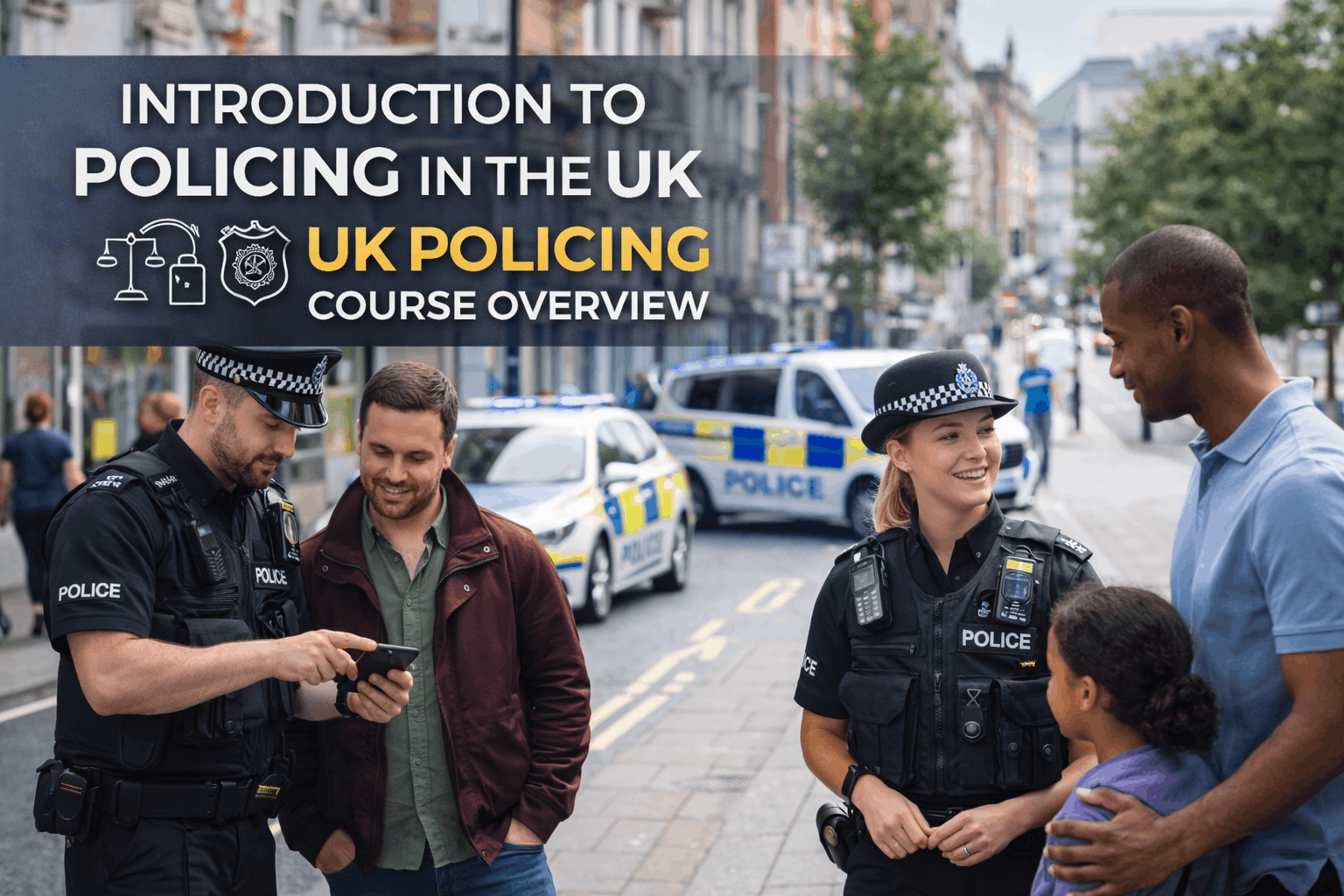
Overview
UK policing course Level 3 provides learners with a comprehensive understanding of how modern policing operates across England, Wales, Scotland, and Northern Ireland. This programme is designed to explain the legal, ethical, and operational foundations of policing while helping students understand how police services protect the public, prevent crime, and maintain social order.
Learners explore the role of police officers within society, including their duties, powers, and responsibilities under UK law. You will gain insight into how legislation shapes policing activity and how officers balance public safety with individual rights. The course also explains how different police forces are structured and how ranks, leadership, and specialist units work together to deliver effective law enforcement.
Modern policing strategies are a key focus. Students learn how community policing builds trust between the public and officers, and how technology such as body cameras, digital communications, and data systems support crime prevention and investigations. This knowledge helps learners understand how policing continues to evolve in response to social change and emerging threats.
Ethical practice, diversity, and inclusion are woven throughout the programme. Learners explore how police services aim to serve all communities fairly and how ethical decision-making supports public confidence. You will also examine real-world challenges such as crime prevention, incident response, and crisis management.
The course looks ahead to the future of policing, including the impact of digital crime, new technologies, and changing public expectations. This forward-looking perspective helps learners see how policing careers and policies will continue to develop in the 21st century.
By completing this uk policing course, learners gain a respected qualification that supports further study, career planning, or informed citizenship. Learners receive a free course completion certificate, with premium certificate and transcript options available for those who require formal documentation. Students also benefit from 5-star rated support available 24/7 through email, ensuring help and guidance are always available during their studies.
Who is this course for?
UK policing course Level 3 provides learners with a comprehensive understanding of how modern policing operates across England, Wales, Scotland, and Northern Ireland. This programme is designed to explain the legal, ethical, and operational foundations of policing while helping students understand how police services protect the public, prevent crime, and maintain social order.
Learners explore the role of police officers within society, including their duties, powers, and responsibilities under UK law. You will gain insight into how legislation shapes policing activity and how officers balance public safety with individual rights. The course also explains how different police forces are structured and how ranks, leadership, and specialist units work together to deliver effective law enforcement.
Modern policing strategies are a key focus. Students learn how community policing builds trust between the public and officers, and how technology such as body cameras, digital communications, and data systems support crime prevention and investigations. This knowledge helps learners understand how policing continues to evolve in response to social change and emerging threats.
Ethical practice, diversity, and inclusion are woven throughout the programme. Learners explore how police services aim to serve all communities fairly and how ethical decision-making supports public confidence. You will also examine real-world challenges such as crime prevention, incident response, and crisis management.
The course looks ahead to the future of policing, including the impact of digital crime, new technologies, and changing public expectations. This forward-looking perspective helps learners see how policing careers and policies will continue to develop in the 21st century.
By completing this uk policing course, learners gain a respected qualification that supports further study, career planning, or informed citizenship. Learners receive a free course completion certificate, with premium certificate and transcript options available for those who require formal documentation. Students also benefit from 5-star rated support available 24/7 through email, ensuring help and guidance are always available during their studies.
Requirements
UK policing course Level 3 provides learners with a comprehensive understanding of how modern policing operates across England, Wales, Scotland, and Northern Ireland. This programme is designed to explain the legal, ethical, and operational foundations of policing while helping students understand how police services protect the public, prevent crime, and maintain social order.
Learners explore the role of police officers within society, including their duties, powers, and responsibilities under UK law. You will gain insight into how legislation shapes policing activity and how officers balance public safety with individual rights. The course also explains how different police forces are structured and how ranks, leadership, and specialist units work together to deliver effective law enforcement.
Modern policing strategies are a key focus. Students learn how community policing builds trust between the public and officers, and how technology such as body cameras, digital communications, and data systems support crime prevention and investigations. This knowledge helps learners understand how policing continues to evolve in response to social change and emerging threats.
Ethical practice, diversity, and inclusion are woven throughout the programme. Learners explore how police services aim to serve all communities fairly and how ethical decision-making supports public confidence. You will also examine real-world challenges such as crime prevention, incident response, and crisis management.
The course looks ahead to the future of policing, including the impact of digital crime, new technologies, and changing public expectations. This forward-looking perspective helps learners see how policing careers and policies will continue to develop in the 21st century.
By completing this uk policing course, learners gain a respected qualification that supports further study, career planning, or informed citizenship. Learners receive a free course completion certificate, with premium certificate and transcript options available for those who require formal documentation. Students also benefit from 5-star rated support available 24/7 through email, ensuring help and guidance are always available during their studies.
Career path
UK policing course Level 3 provides learners with a comprehensive understanding of how modern policing operates across England, Wales, Scotland, and Northern Ireland. This programme is designed to explain the legal, ethical, and operational foundations of policing while helping students understand how police services protect the public, prevent crime, and maintain social order.
Learners explore the role of police officers within society, including their duties, powers, and responsibilities under UK law. You will gain insight into how legislation shapes policing activity and how officers balance public safety with individual rights. The course also explains how different police forces are structured and how ranks, leadership, and specialist units work together to deliver effective law enforcement.
Modern policing strategies are a key focus. Students learn how community policing builds trust between the public and officers, and how technology such as body cameras, digital communications, and data systems support crime prevention and investigations. This knowledge helps learners understand how policing continues to evolve in response to social change and emerging threats.
Ethical practice, diversity, and inclusion are woven throughout the programme. Learners explore how police services aim to serve all communities fairly and how ethical decision-making supports public confidence. You will also examine real-world challenges such as crime prevention, incident response, and crisis management.
The course looks ahead to the future of policing, including the impact of digital crime, new technologies, and changing public expectations. This forward-looking perspective helps learners see how policing careers and policies will continue to develop in the 21st century.
By completing this uk policing course, learners gain a respected qualification that supports further study, career planning, or informed citizenship. Learners receive a free course completion certificate, with premium certificate and transcript options available for those who require formal documentation. Students also benefit from 5-star rated support available 24/7 through email, ensuring help and guidance are always available during their studies.
-
- Understanding the Role of Police in Society 00:10:00
- Legal Framework 00:10:00
-
- Types of Police Forces in the UK 00:10:00
- Police Ranks and Hierarchy 00:10:00
- Community Policing 00:10:00
- Modern Policing Technologies 00:10:00
- Crime Prevention and Detection 00:10:00
- Critical Incidents and Crisis Management 00:10:00
- Exam of Introduction to Policing in the UK: A Comprehensive Overview 00:50:00

Is this certificate recognized?
Yes, our premium certificate and transcript are widely recognized and accepted by embassies worldwide, particularly by the UK embassy. This adds credibility to your qualification and enhances its value for professional and academic purposes.
I am a beginner. Is this course suitable for me?
Yes, this course is designed for learners of all levels, including beginners. The content is structured to provide step-by-step guidance, ensuring that even those with no prior experience can follow along and gain valuable knowledge.
I am a professional. Is this course suitable for me?
Yes, professionals will also benefit from this course. It covers advanced concepts, practical applications, and industry insights that can help enhance existing skills and knowledge. Whether you are looking to refine your expertise or expand your qualifications, this course provides valuable learning.
Does this course have an expiry date?
No, you have lifetime access to the course. Once enrolled, you can revisit the materials at any time as long as the course remains available. Additionally, we regularly update our content to ensure it stays relevant and up to date.
How do I claim my free certificate?
I trust you’re in good health. Your free certificate can be located in the Achievement section. The option to purchase a CPD certificate is available but entirely optional, and you may choose to skip it. Please be aware that it’s crucial to click the “Complete” button to ensure the certificate is generated, as this process is entirely automated.
Does this course have assessments and assignments?
Yes, the course includes both assessments and assignments. Your final marks will be determined by a combination of 20% from assignments and 80% from assessments. These evaluations are designed to test your understanding and ensure you have grasped the key concepts effectively.
Is this course accredited?
We are a recognized course provider with CPD, UKRLP, and AOHT membership. The logos of these accreditation bodies will be featured on your premium certificate and transcript, ensuring credibility and professional recognition.
Will I receive a certificate upon completion?
Yes, you will receive a free digital certificate automatically once you complete the course. If you would like a premium CPD-accredited certificate, either in digital or physical format, you can upgrade for a small fee.
Course Features
Price
Study Method
Online | Self-paced
Course Format
Reading Material - PDF, article
Duration
2 hours, 55 minutes
Qualification
No formal qualification
Certificate
At completion
Additional info
Coming soon
- Share

Transportation Safety and Compliance
Course Line239£490.00Original price was: £490.00.£14.99Current price is: £14.99.Botany Level 3 Advanced Diploma
Course Line239£490.00Original price was: £490.00.£14.99Current price is: £14.99.Environmental Sustainability Level 3 Advanced Diploma
Course Line242£490.00Original price was: £490.00.£14.99Current price is: £14.99.


Related Courses
PRINCE2 in the Real World: Practical Project Management Skills
£490.00Original price was: £490.00.£14.99Current price is: £14.99.237PRINCE2 Practitioner Certification Preparation
£490.00Original price was: £490.00.£14.99Current price is: £14.99.237




Related Courses
PRINCE2 in the Real World: Practical Project Management Skills
£490.00Original price was: £490.00.£14.99Current price is: £14.99.237PRINCE2 Practitioner Certification Preparation
£490.00Original price was: £490.00.£14.99Current price is: £14.99.237


repetitive