
Course Features
Price
Study Method
Online | Self-paced
Course Format
Reading Material - PDF, article
Duration
9 hours, 5 minutes
Qualification
No formal qualification
Certificate
At completion
Additional info
Coming soon
- Share
Overview
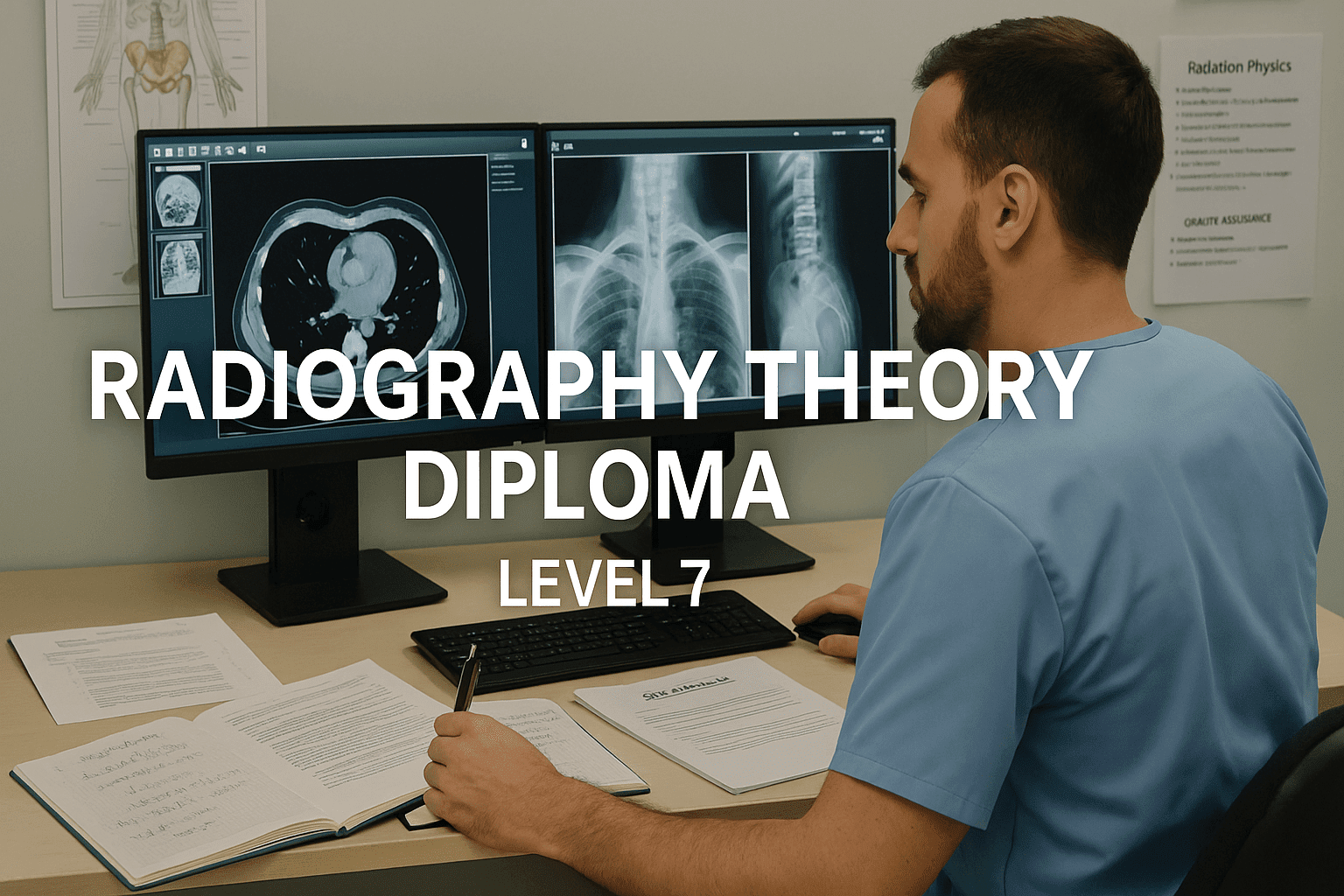
Radiography Theory Diploma training at Level 7 provides an advanced academic foundation for radiographers and imaging professionals seeking to deepen their understanding of diagnostic science, imaging principles, and theoretical frameworks that underpin clinical radiography practice in the UK. This programme is designed to build high-level analytical skills and strengthen the clinical reasoning needed to interpret imaging findings, optimise image quality, and support safe, effective diagnostic pathways.
Learners will explore complex concepts in radiation physics, image formation, safety regulation, and quality assurance while examining how UK legislation such as IRR17 and IR(ME)R 2017 influences everyday radiographic practice. A significant focus is placed on advanced anatomy, pathology, and cross-sectional interpretation, enabling students to better recognise patterns, differentiate normal from abnormal presentations, and identify conditions commonly encountered across musculoskeletal, thoracic, abdominal, neurological, and paediatric imaging.
The diploma also develops theoretical knowledge of CT, MRI, ultrasound, nuclear medicine and PET imaging, giving learners a comprehensive understanding of modern multimodality diagnostics. Critical evaluation of artefacts, protocol design, contrast media theory and evidence-based image optimisation further enhances learners’ ability to support accurate diagnostic outcomes and contribute to service improvement initiatives.
Leadership, research skills and professional development are integrated throughout the course, preparing learners to participate in clinical governance, conduct research, and contribute to innovation in radiography. By completing case-based assessments, research activities and advanced interpretation tasks, students build the theoretical expertise expected of senior practitioners and those preparing for advanced practice roles.
Delivered fully online with flexible study options, the programme is suitable for working professionals seeking progression without disrupting clinical schedules. Upon completion, learners will receive a free course completion certificate, with options to purchase premium certificates and official transcripts if desired. Students also have access to 5-star rated support available 24/7 by email, ensuring reliable academic assistance throughout their studies.
Who is this course for?
Radiography Theory Diploma training at Level 7 provides an advanced academic foundation for radiographers and imaging professionals seeking to deepen their understanding of diagnostic science, imaging principles, and theoretical frameworks that underpin clinical radiography practice in the UK. This programme is designed to build high-level analytical skills and strengthen the clinical reasoning needed to interpret imaging findings, optimise image quality, and support safe, effective diagnostic pathways.
Learners will explore complex concepts in radiation physics, image formation, safety regulation, and quality assurance while examining how UK legislation such as IRR17 and IR(ME)R 2017 influences everyday radiographic practice. A significant focus is placed on advanced anatomy, pathology, and cross-sectional interpretation, enabling students to better recognise patterns, differentiate normal from abnormal presentations, and identify conditions commonly encountered across musculoskeletal, thoracic, abdominal, neurological, and paediatric imaging.
The diploma also develops theoretical knowledge of CT, MRI, ultrasound, nuclear medicine and PET imaging, giving learners a comprehensive understanding of modern multimodality diagnostics. Critical evaluation of artefacts, protocol design, contrast media theory and evidence-based image optimisation further enhances learners’ ability to support accurate diagnostic outcomes and contribute to service improvement initiatives.
Leadership, research skills and professional development are integrated throughout the course, preparing learners to participate in clinical governance, conduct research, and contribute to innovation in radiography. By completing case-based assessments, research activities and advanced interpretation tasks, students build the theoretical expertise expected of senior practitioners and those preparing for advanced practice roles.
Delivered fully online with flexible study options, the programme is suitable for working professionals seeking progression without disrupting clinical schedules. Upon completion, learners will receive a free course completion certificate, with options to purchase premium certificates and official transcripts if desired. Students also have access to 5-star rated support available 24/7 by email, ensuring reliable academic assistance throughout their studies.
Requirements
Radiography Theory Diploma training at Level 7 provides an advanced academic foundation for radiographers and imaging professionals seeking to deepen their understanding of diagnostic science, imaging principles, and theoretical frameworks that underpin clinical radiography practice in the UK. This programme is designed to build high-level analytical skills and strengthen the clinical reasoning needed to interpret imaging findings, optimise image quality, and support safe, effective diagnostic pathways.
Learners will explore complex concepts in radiation physics, image formation, safety regulation, and quality assurance while examining how UK legislation such as IRR17 and IR(ME)R 2017 influences everyday radiographic practice. A significant focus is placed on advanced anatomy, pathology, and cross-sectional interpretation, enabling students to better recognise patterns, differentiate normal from abnormal presentations, and identify conditions commonly encountered across musculoskeletal, thoracic, abdominal, neurological, and paediatric imaging.
The diploma also develops theoretical knowledge of CT, MRI, ultrasound, nuclear medicine and PET imaging, giving learners a comprehensive understanding of modern multimodality diagnostics. Critical evaluation of artefacts, protocol design, contrast media theory and evidence-based image optimisation further enhances learners’ ability to support accurate diagnostic outcomes and contribute to service improvement initiatives.
Leadership, research skills and professional development are integrated throughout the course, preparing learners to participate in clinical governance, conduct research, and contribute to innovation in radiography. By completing case-based assessments, research activities and advanced interpretation tasks, students build the theoretical expertise expected of senior practitioners and those preparing for advanced practice roles.
Delivered fully online with flexible study options, the programme is suitable for working professionals seeking progression without disrupting clinical schedules. Upon completion, learners will receive a free course completion certificate, with options to purchase premium certificates and official transcripts if desired. Students also have access to 5-star rated support available 24/7 by email, ensuring reliable academic assistance throughout their studies.
Career path
Radiography Theory Diploma training at Level 7 provides an advanced academic foundation for radiographers and imaging professionals seeking to deepen their understanding of diagnostic science, imaging principles, and theoretical frameworks that underpin clinical radiography practice in the UK. This programme is designed to build high-level analytical skills and strengthen the clinical reasoning needed to interpret imaging findings, optimise image quality, and support safe, effective diagnostic pathways.
Learners will explore complex concepts in radiation physics, image formation, safety regulation, and quality assurance while examining how UK legislation such as IRR17 and IR(ME)R 2017 influences everyday radiographic practice. A significant focus is placed on advanced anatomy, pathology, and cross-sectional interpretation, enabling students to better recognise patterns, differentiate normal from abnormal presentations, and identify conditions commonly encountered across musculoskeletal, thoracic, abdominal, neurological, and paediatric imaging.
The diploma also develops theoretical knowledge of CT, MRI, ultrasound, nuclear medicine and PET imaging, giving learners a comprehensive understanding of modern multimodality diagnostics. Critical evaluation of artefacts, protocol design, contrast media theory and evidence-based image optimisation further enhances learners’ ability to support accurate diagnostic outcomes and contribute to service improvement initiatives.
Leadership, research skills and professional development are integrated throughout the course, preparing learners to participate in clinical governance, conduct research, and contribute to innovation in radiography. By completing case-based assessments, research activities and advanced interpretation tasks, students build the theoretical expertise expected of senior practitioners and those preparing for advanced practice roles.
Delivered fully online with flexible study options, the programme is suitable for working professionals seeking progression without disrupting clinical schedules. Upon completion, learners will receive a free course completion certificate, with options to purchase premium certificates and official transcripts if desired. Students also have access to 5-star rated support available 24/7 by email, ensuring reliable academic assistance throughout their studies.
-
- Evolution of Radiography & Regulatory Frameworks in the UK 00:10:00
- Radiation Physics – Advanced Concepts 00:10:00
- Interaction of Radiation with Matter 00:10:00
- Image Formation Principles & Optimisation 00:10:00
- Radiation Units, Measurements & Safety Standards (IRR17, IR(ME)R 2017) 00:10:00
-
- Advanced Musculoskeletal Anatomy & Imaging Considerations 00:00:00
- Thoracic & Cardiovascular System Imaging 00:10:00
- Abdominal & Pelvic Anatomy for Diagnostic Radiography 00:10:00
- Neurological Anatomy & Cross-Sectional Interpretation 00:10:00
- Pathophysiology of Common Diagnostic Conditions 00:10:00
- Digital Radiography (DR/CR) – Technology & Image Processing 00:10:00
- Computed Tomography (CT) – Principles, Detectors & Reconstruction 00:10:00
- Magnetic Resonance Imaging (MRI) – Advanced Sequences & Safety 00:10:00
- Ultrasound Physics & Image Interpretation Theory 00:10:00
- Nuclear Medicine & PET Imaging – Functional Imaging Concepts 00:10:00
- Chest Radiography – Advanced Patterns & Abnormalities 00:10:00
- Musculoskeletal Image Interpretation 00:10:00
- Abdominal Radiography – Bowel Gas Patterns & Pathologies 00:10:00
- Neurological Imaging – CT/MRI Interpretation Theory 00:10:00
- Paediatric Imaging – Normal Variants vs Pathology 00:10:00
- Evidence-Based Practice in Diagnostic Radiography 00:10:00
- Research Design – Qualitative, Quantitative & Mixed Methods 00:10:00
- Data Collection, Ethics & Governance in UK Healthcare Research 00:10:00
- Statistical Analysis for Radiography Research 00:10:00
- Writing & Presenting Research at a Professional Standard 00:10:00
- Interventional Radiography – Theory & Patient Management 00:10:00
- Mammography – Breast Imaging Physics & Interpretation 00:10:00
- Dental & Maxillofacial Radiography – Techniques & Safety 00:10:00
- Forensic Radiography – Theory & Legal Considerations 00:10:00
- Veterinary Radiography (Theory & Comparative Anatomy) 00:10:00
- Exam of Level 7 Advanced Diploma in Radiography Theory 00:50:00

Is this certificate recognized?
Yes, our premium certificate and transcript are widely recognized and accepted by embassies worldwide, particularly by the UK embassy. This adds credibility to your qualification and enhances its value for professional and academic purposes.
I am a beginner. Is this course suitable for me?
Yes, this course is designed for learners of all levels, including beginners. The content is structured to provide step-by-step guidance, ensuring that even those with no prior experience can follow along and gain valuable knowledge.
I am a professional. Is this course suitable for me?
Yes, professionals will also benefit from this course. It covers advanced concepts, practical applications, and industry insights that can help enhance existing skills and knowledge. Whether you are looking to refine your expertise or expand your qualifications, this course provides valuable learning.
Does this course have an expiry date?
No, you have lifetime access to the course. Once enrolled, you can revisit the materials at any time as long as the course remains available. Additionally, we regularly update our content to ensure it stays relevant and up to date.
How do I claim my free certificate?
I trust you’re in good health. Your free certificate can be located in the Achievement section. The option to purchase a CPD certificate is available but entirely optional, and you may choose to skip it. Please be aware that it’s crucial to click the “Complete” button to ensure the certificate is generated, as this process is entirely automated.
Does this course have assessments and assignments?
Yes, the course includes both assessments and assignments. Your final marks will be determined by a combination of 20% from assignments and 80% from assessments. These evaluations are designed to test your understanding and ensure you have grasped the key concepts effectively.
Is this course accredited?
We are a recognized course provider with CPD, UKRLP, and AOHT membership. The logos of these accreditation bodies will be featured on your premium certificate and transcript, ensuring credibility and professional recognition.
Will I receive a certificate upon completion?
Yes, you will receive a free digital certificate automatically once you complete the course. If you would like a premium CPD-accredited certificate, either in digital or physical format, you can upgrade for a small fee.
Course Features
Price
Study Method
Online | Self-paced
Course Format
Reading Material - PDF, article
Duration
9 hours, 5 minutes
Qualification
No formal qualification
Certificate
At completion
Additional info
Coming soon
- Share

Travel Agent and Consultant
Course Line239£490.00Original price was: £490.00.£14.99Current price is: £14.99.Primary Teaching Level 8 Advanced Diploma
Course Line238£490.00Original price was: £490.00.£14.99Current price is: £14.99.Facilitation Skills Level 3 Advanced Diploma
Course Line242£490.00Original price was: £490.00.£14.99Current price is: £14.99.


Related Courses
Holistic Health Coach Certification: Nutrition, Fitness & Lifestyle Coaching
£490.00Original price was: £490.00.£14.99Current price is: £14.99.237Pet Training & Behaviour Mastery: Dogs, Cats, Rabbits & Pet First Aid
£490.00Original price was: £490.00.£14.99Current price is: £14.99.237Inpatient Coding Masterclass: DRG & PCS Complete Training
£490.00Original price was: £490.00.£14.99Current price is: £14.99.237




Related Courses
Holistic Health Coach Certification: Nutrition, Fitness & Lifestyle Coaching
£490.00Original price was: £490.00.£14.99Current price is: £14.99.237Pet Training & Behaviour Mastery: Dogs, Cats, Rabbits & Pet First Aid
£490.00Original price was: £490.00.£14.99Current price is: £14.99.237Inpatient Coding Masterclass: DRG & PCS Complete Training
£490.00Original price was: £490.00.£14.99Current price is: £14.99.237


The content is with key areas of the course, and it is work ready.