Course Features
Price
Study Method
Online | Self-paced
Course Format
Reading Material - PDF, article
Duration
7 hours, 5 minutes
Qualification
No formal qualification
Certificate
At completion
Additional info
Coming soon
- Share
Overview
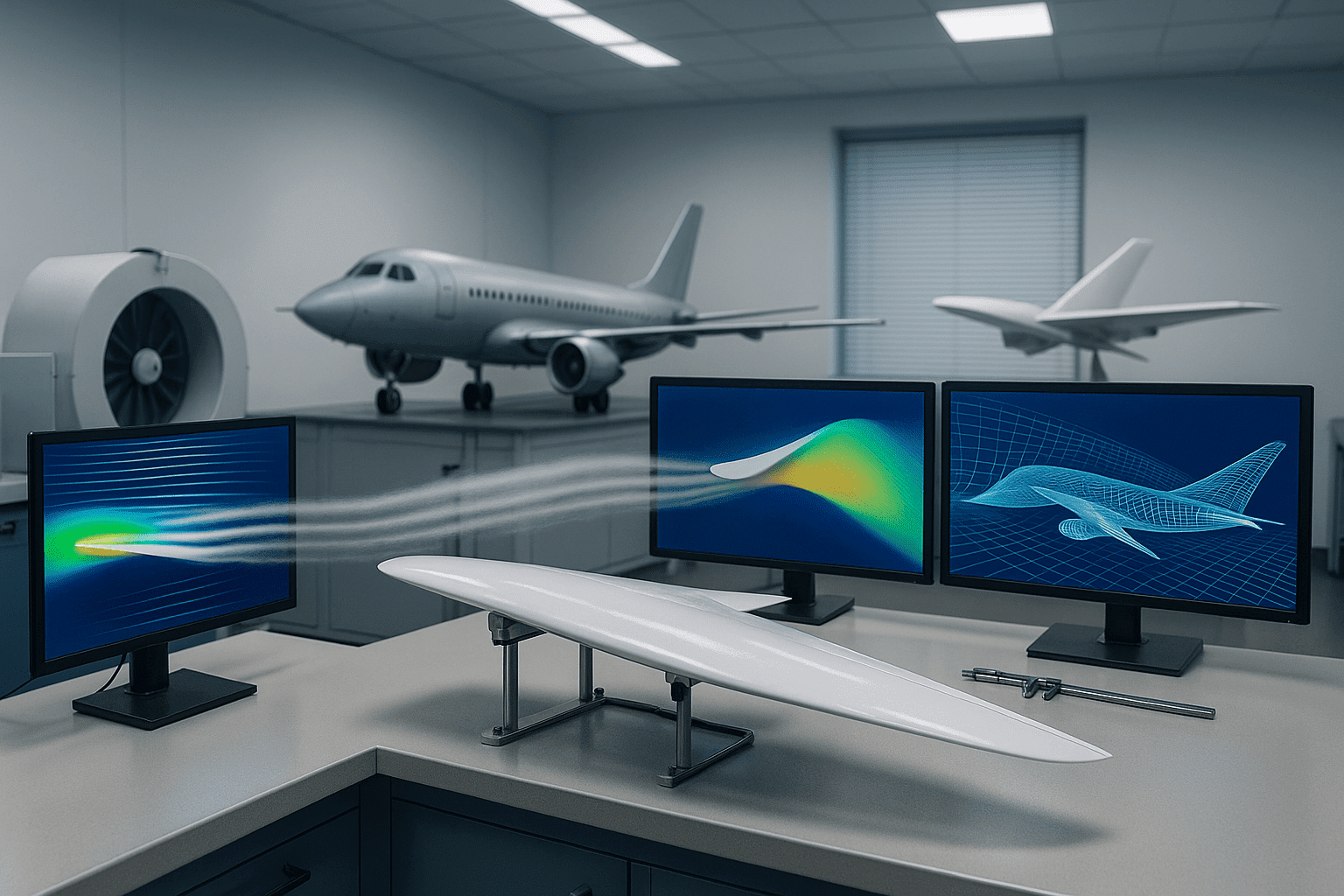
The aerodynamics diploma provides a comprehensive introduction to the essential principles that govern how aircraft, vehicles, and other engineered systems move through air. Designed for learners who want a clear and structured understanding of airflow behaviour, forces of flight, high-speed aerodynamics, and modern aerodynamic design, this programme builds a strong foundation suitable for aviation, engineering, and technical career paths.
Across the course, students explore the fundamentals of fluid mechanics, including how pressure, density, viscosity, and fluid motion influence real-world aerodynamic performance. You will study the four forces of flight—lift, weight, thrust, and drag—and discover how these forces interact during different flight phases such as takeoff, climb, cruise, and landing. The course also explains how airfoil geometry and angle of attack contribute to lift generation, providing learners with insight into the science behind efficient aircraft design.
As you progress, you’ll gain exposure to advanced topics such as compressibility effects, shock waves, transonic flow, and the unique challenges of supersonic and hypersonic regimes. Modern techniques used in industry, including Computational Fluid Dynamics (CFD), are introduced in an accessible way to show how digital simulations help engineers analyse complex aerodynamic behaviour. The course also covers aeroelasticity, vortex dynamics, ground effect, winglets, and other innovations shaping next-generation aircraft.
Learners will develop practical confidence by understanding how design decisions influence stability, control, drag reduction, and overall performance. Whether you aim to advance academically or simply want to understand the principles behind flight and modern aerospace technology, this programme delivers clear explanations and valuable insight.
Upon successful completion, students receive a free course completion certificate, and those who want enhanced recognition can choose from multiple premium certificate and transcript options. In addition, all learners enjoy 5-star rated support, available 24/7 through email, ensuring help is always within reach.
Who is this course for?
The aerodynamics diploma provides a comprehensive introduction to the essential principles that govern how aircraft, vehicles, and other engineered systems move through air. Designed for learners who want a clear and structured understanding of airflow behaviour, forces of flight, high-speed aerodynamics, and modern aerodynamic design, this programme builds a strong foundation suitable for aviation, engineering, and technical career paths.
Across the course, students explore the fundamentals of fluid mechanics, including how pressure, density, viscosity, and fluid motion influence real-world aerodynamic performance. You will study the four forces of flight—lift, weight, thrust, and drag—and discover how these forces interact during different flight phases such as takeoff, climb, cruise, and landing. The course also explains how airfoil geometry and angle of attack contribute to lift generation, providing learners with insight into the science behind efficient aircraft design.
As you progress, you’ll gain exposure to advanced topics such as compressibility effects, shock waves, transonic flow, and the unique challenges of supersonic and hypersonic regimes. Modern techniques used in industry, including Computational Fluid Dynamics (CFD), are introduced in an accessible way to show how digital simulations help engineers analyse complex aerodynamic behaviour. The course also covers aeroelasticity, vortex dynamics, ground effect, winglets, and other innovations shaping next-generation aircraft.
Learners will develop practical confidence by understanding how design decisions influence stability, control, drag reduction, and overall performance. Whether you aim to advance academically or simply want to understand the principles behind flight and modern aerospace technology, this programme delivers clear explanations and valuable insight.
Upon successful completion, students receive a free course completion certificate, and those who want enhanced recognition can choose from multiple premium certificate and transcript options. In addition, all learners enjoy 5-star rated support, available 24/7 through email, ensuring help is always within reach.
Requirements
The aerodynamics diploma provides a comprehensive introduction to the essential principles that govern how aircraft, vehicles, and other engineered systems move through air. Designed for learners who want a clear and structured understanding of airflow behaviour, forces of flight, high-speed aerodynamics, and modern aerodynamic design, this programme builds a strong foundation suitable for aviation, engineering, and technical career paths.
Across the course, students explore the fundamentals of fluid mechanics, including how pressure, density, viscosity, and fluid motion influence real-world aerodynamic performance. You will study the four forces of flight—lift, weight, thrust, and drag—and discover how these forces interact during different flight phases such as takeoff, climb, cruise, and landing. The course also explains how airfoil geometry and angle of attack contribute to lift generation, providing learners with insight into the science behind efficient aircraft design.
As you progress, you’ll gain exposure to advanced topics such as compressibility effects, shock waves, transonic flow, and the unique challenges of supersonic and hypersonic regimes. Modern techniques used in industry, including Computational Fluid Dynamics (CFD), are introduced in an accessible way to show how digital simulations help engineers analyse complex aerodynamic behaviour. The course also covers aeroelasticity, vortex dynamics, ground effect, winglets, and other innovations shaping next-generation aircraft.
Learners will develop practical confidence by understanding how design decisions influence stability, control, drag reduction, and overall performance. Whether you aim to advance academically or simply want to understand the principles behind flight and modern aerospace technology, this programme delivers clear explanations and valuable insight.
Upon successful completion, students receive a free course completion certificate, and those who want enhanced recognition can choose from multiple premium certificate and transcript options. In addition, all learners enjoy 5-star rated support, available 24/7 through email, ensuring help is always within reach.
Career path
The aerodynamics diploma provides a comprehensive introduction to the essential principles that govern how aircraft, vehicles, and other engineered systems move through air. Designed for learners who want a clear and structured understanding of airflow behaviour, forces of flight, high-speed aerodynamics, and modern aerodynamic design, this programme builds a strong foundation suitable for aviation, engineering, and technical career paths.
Across the course, students explore the fundamentals of fluid mechanics, including how pressure, density, viscosity, and fluid motion influence real-world aerodynamic performance. You will study the four forces of flight—lift, weight, thrust, and drag—and discover how these forces interact during different flight phases such as takeoff, climb, cruise, and landing. The course also explains how airfoil geometry and angle of attack contribute to lift generation, providing learners with insight into the science behind efficient aircraft design.
As you progress, you’ll gain exposure to advanced topics such as compressibility effects, shock waves, transonic flow, and the unique challenges of supersonic and hypersonic regimes. Modern techniques used in industry, including Computational Fluid Dynamics (CFD), are introduced in an accessible way to show how digital simulations help engineers analyse complex aerodynamic behaviour. The course also covers aeroelasticity, vortex dynamics, ground effect, winglets, and other innovations shaping next-generation aircraft.
Learners will develop practical confidence by understanding how design decisions influence stability, control, drag reduction, and overall performance. Whether you aim to advance academically or simply want to understand the principles behind flight and modern aerospace technology, this programme delivers clear explanations and valuable insight.
Upon successful completion, students receive a free course completion certificate, and those who want enhanced recognition can choose from multiple premium certificate and transcript options. In addition, all learners enjoy 5-star rated support, available 24/7 through email, ensuring help is always within reach.
-
- What is Aerodynamics? 00:10:00
- History and Importance of Aerodynamics 00:10:00
- Aerodynamics Applications in Different Industries 00:10:00
-
- Properties of Fluids 00:10:00
- Fluid Statics and Dynamics 00:10:00
- Bernoulli’s Principle and its Applications 00:10:00
- Four Forces of Flight: Lift, Weight, Thrust, and Drag 00:10:00
- Relationship between Forces and Newton’s Laws of Motion 00:10:00
- Understanding Flight Phases: Takeoff, Climb, Cruise, Descent, Landing 00:10:00
- Types of Drag: Form Drag, Skin Friction Drag, and Induced Drag 00:10:00
- Drag Coefficient and Drag Polar 00:10:00
- Drag Reduction Strategies: Streamlining, Winglets, and Boundary 00:10:00
- Wing Geometry and Aspect Ratio 00:10:00
- Wing Loading and its Influence on Performance 00:10:00
- Swept Wings and Delta Wings: Advantages and Disadvantages 00:10:00
- Introduction to CFD and its Applications in Aerodynamics 00:10:00
- CFD Modeling and Simulation Process 00:10:00
- Practical Examples of CFD Analysis in Aerospace Design 00:10:00
- Vortex Dynamics and Wingtip Devices 00:10:00
- Ground Effect and its Impact on Aircraft Performance 00:10:00
- Transonic Aerodynamics and Wave Drag 00:10:00
- Exam of Aerodynamics Level 3 Advanced Diploma 00:50:00

No Reviews found for this course.
Is this certificate recognized?
Yes, our premium certificate and transcript are widely recognized and accepted by embassies worldwide, particularly by the UK embassy. This adds credibility to your qualification and enhances its value for professional and academic purposes.
I am a beginner. Is this course suitable for me?
Yes, this course is designed for learners of all levels, including beginners. The content is structured to provide step-by-step guidance, ensuring that even those with no prior experience can follow along and gain valuable knowledge.
I am a professional. Is this course suitable for me?
Yes, professionals will also benefit from this course. It covers advanced concepts, practical applications, and industry insights that can help enhance existing skills and knowledge. Whether you are looking to refine your expertise or expand your qualifications, this course provides valuable learning.
Does this course have an expiry date?
No, you have lifetime access to the course. Once enrolled, you can revisit the materials at any time as long as the course remains available. Additionally, we regularly update our content to ensure it stays relevant and up to date.
How do I claim my free certificate?
I trust you’re in good health. Your free certificate can be located in the Achievement section. The option to purchase a CPD certificate is available but entirely optional, and you may choose to skip it. Please be aware that it’s crucial to click the “Complete” button to ensure the certificate is generated, as this process is entirely automated.
Does this course have assessments and assignments?
Yes, the course includes both assessments and assignments. Your final marks will be determined by a combination of 20% from assignments and 80% from assessments. These evaluations are designed to test your understanding and ensure you have grasped the key concepts effectively.
Is this course accredited?
We are a recognized course provider with CPD, UKRLP, and AOHT membership. The logos of these accreditation bodies will be featured on your premium certificate and transcript, ensuring credibility and professional recognition.
Will I receive a certificate upon completion?
Yes, you will receive a free digital certificate automatically once you complete the course. If you would like a premium CPD-accredited certificate, either in digital or physical format, you can upgrade for a small fee.
Course Features
Price
Study Method
Online | Self-paced
Course Format
Reading Material - PDF, article
Duration
7 hours, 5 minutes
Qualification
No formal qualification
Certificate
At completion
Additional info
Coming soon
- Share

ENT Level 7 Advanced Diploma
Course Line239£490.00Original price was: £490.00.£14.99Current price is: £14.99.Art Conservation Level 3 Advanced Diploma
Course Line251£490.00Original price was: £490.00.£14.99Current price is: £14.99.Functional Skills Maths Level 1: Practical Numeracy for Everyday Life
Course Line245£490.00Original price was: £490.00.£14.99Current price is: £14.99.



Related Courses
Engineering Mathematics Level 5 Advanced Diploma
£490.00Original price was: £490.00.£14.99Current price is: £14.99.237Civil Engineering Building Construction Fundamentals: Site, Codes & Quantity Skills
£490.00Original price was: £490.00.£14.99Current price is: £14.99.237CNC Milling Machine Programming Masterclass: From Basics to Advanced G-Code
£490.00Original price was: £490.00.£14.99Current price is: £14.99.237




Related Courses
Engineering Mathematics Level 5 Advanced Diploma
£490.00Original price was: £490.00.£14.99Current price is: £14.99.237Civil Engineering Building Construction Fundamentals: Site, Codes & Quantity Skills
£490.00Original price was: £490.00.£14.99Current price is: £14.99.237CNC Milling Machine Programming Masterclass: From Basics to Advanced G-Code
£490.00Original price was: £490.00.£14.99Current price is: £14.99.237