Course Features
Price
Study Method
Online | Self-paced
Course Format
Reading Material - PDF, article
Duration
2 hours, 45 minutes
Qualification
No formal qualification
Certificate
At completion
Additional info
Coming soon
- Share
Overview
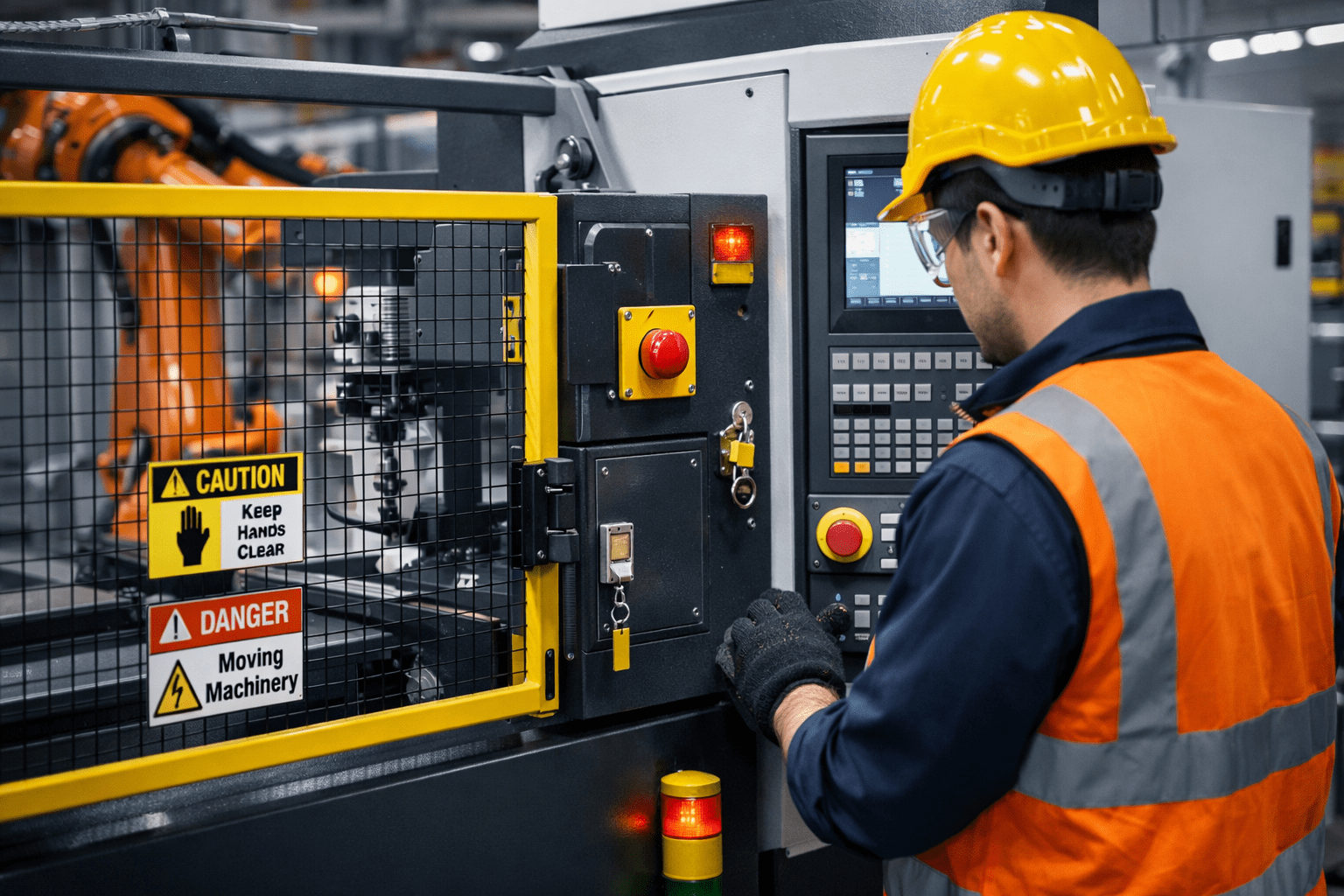
machine guarding safety is a critical part of protecting workers, reducing workplace injuries, and ensuring industrial operations meet modern safety standards. This course delivers clear, practical, and professionally structured training on how machines should be guarded, how hazards arise, and how risks can be controlled through proper equipment, procedures, and worker awareness. It is designed for real-world industrial environments where mechanical, electrical, and automated systems are used daily.
Learners will explore the different types of machine guards, including fixed, adjustable, interlocking, and presence-sensing devices, and understand how each one contributes to keeping dangerous moving parts safely isolated. The course also explains which parts of machines must always be guarded, such as rotating shafts, cutting tools, belts, gears, and points of operation. These lessons are supported by hazard identification techniques that help workers recognise unsafe conditions before an incident occurs.
Beyond physical guarding systems, the course covers supporting safety practices that strengthen overall protection. Topics include accident investigation basics, learning how incidents occur, and applying corrective actions that prevent future injuries. Learners will also study codes of safe practice that guide safe machine operation, maintenance, and inspection procedures across workshops, factories, and production lines.
This training is designed to be practical and easy to apply, even for those with limited technical backgrounds. It supports compliance with workplace health and safety regulations while helping employers reduce downtime, liability, and injury-related costs. By the end of the course, learners will understand how to assess risks, select appropriate guarding methods, and maintain safe working conditions around machinery.
Upon successful completion, learners will receive a free course completion certificate. Multiple premium certificate and transcript options are also available for purchase if required for employers, audits, or professional records. Students also receive 5-star rated support available 24/7 through email, ensuring help is always available throughout their learning journey.
This course is ideal for machine operators, technicians, supervisors, maintenance staff, health and safety officers, and anyone working around industrial or workshop equipment. It is also suitable for employers and managers who want to improve safety standards and reduce workplace risk.
Who is this course for?
machine guarding safety is a critical part of protecting workers, reducing workplace injuries, and ensuring industrial operations meet modern safety standards. This course delivers clear, practical, and professionally structured training on how machines should be guarded, how hazards arise, and how risks can be controlled through proper equipment, procedures, and worker awareness. It is designed for real-world industrial environments where mechanical, electrical, and automated systems are used daily.
Learners will explore the different types of machine guards, including fixed, adjustable, interlocking, and presence-sensing devices, and understand how each one contributes to keeping dangerous moving parts safely isolated. The course also explains which parts of machines must always be guarded, such as rotating shafts, cutting tools, belts, gears, and points of operation. These lessons are supported by hazard identification techniques that help workers recognise unsafe conditions before an incident occurs.
Beyond physical guarding systems, the course covers supporting safety practices that strengthen overall protection. Topics include accident investigation basics, learning how incidents occur, and applying corrective actions that prevent future injuries. Learners will also study codes of safe practice that guide safe machine operation, maintenance, and inspection procedures across workshops, factories, and production lines.
This training is designed to be practical and easy to apply, even for those with limited technical backgrounds. It supports compliance with workplace health and safety regulations while helping employers reduce downtime, liability, and injury-related costs. By the end of the course, learners will understand how to assess risks, select appropriate guarding methods, and maintain safe working conditions around machinery.
Upon successful completion, learners will receive a free course completion certificate. Multiple premium certificate and transcript options are also available for purchase if required for employers, audits, or professional records. Students also receive 5-star rated support available 24/7 through email, ensuring help is always available throughout their learning journey.
This course is ideal for machine operators, technicians, supervisors, maintenance staff, health and safety officers, and anyone working around industrial or workshop equipment. It is also suitable for employers and managers who want to improve safety standards and reduce workplace risk.
Requirements
machine guarding safety is a critical part of protecting workers, reducing workplace injuries, and ensuring industrial operations meet modern safety standards. This course delivers clear, practical, and professionally structured training on how machines should be guarded, how hazards arise, and how risks can be controlled through proper equipment, procedures, and worker awareness. It is designed for real-world industrial environments where mechanical, electrical, and automated systems are used daily.
Learners will explore the different types of machine guards, including fixed, adjustable, interlocking, and presence-sensing devices, and understand how each one contributes to keeping dangerous moving parts safely isolated. The course also explains which parts of machines must always be guarded, such as rotating shafts, cutting tools, belts, gears, and points of operation. These lessons are supported by hazard identification techniques that help workers recognise unsafe conditions before an incident occurs.
Beyond physical guarding systems, the course covers supporting safety practices that strengthen overall protection. Topics include accident investigation basics, learning how incidents occur, and applying corrective actions that prevent future injuries. Learners will also study codes of safe practice that guide safe machine operation, maintenance, and inspection procedures across workshops, factories, and production lines.
This training is designed to be practical and easy to apply, even for those with limited technical backgrounds. It supports compliance with workplace health and safety regulations while helping employers reduce downtime, liability, and injury-related costs. By the end of the course, learners will understand how to assess risks, select appropriate guarding methods, and maintain safe working conditions around machinery.
Upon successful completion, learners will receive a free course completion certificate. Multiple premium certificate and transcript options are also available for purchase if required for employers, audits, or professional records. Students also receive 5-star rated support available 24/7 through email, ensuring help is always available throughout their learning journey.
This course is ideal for machine operators, technicians, supervisors, maintenance staff, health and safety officers, and anyone working around industrial or workshop equipment. It is also suitable for employers and managers who want to improve safety standards and reduce workplace risk.
Career path
machine guarding safety is a critical part of protecting workers, reducing workplace injuries, and ensuring industrial operations meet modern safety standards. This course delivers clear, practical, and professionally structured training on how machines should be guarded, how hazards arise, and how risks can be controlled through proper equipment, procedures, and worker awareness. It is designed for real-world industrial environments where mechanical, electrical, and automated systems are used daily.
Learners will explore the different types of machine guards, including fixed, adjustable, interlocking, and presence-sensing devices, and understand how each one contributes to keeping dangerous moving parts safely isolated. The course also explains which parts of machines must always be guarded, such as rotating shafts, cutting tools, belts, gears, and points of operation. These lessons are supported by hazard identification techniques that help workers recognise unsafe conditions before an incident occurs.
Beyond physical guarding systems, the course covers supporting safety practices that strengthen overall protection. Topics include accident investigation basics, learning how incidents occur, and applying corrective actions that prevent future injuries. Learners will also study codes of safe practice that guide safe machine operation, maintenance, and inspection procedures across workshops, factories, and production lines.
This training is designed to be practical and easy to apply, even for those with limited technical backgrounds. It supports compliance with workplace health and safety regulations while helping employers reduce downtime, liability, and injury-related costs. By the end of the course, learners will understand how to assess risks, select appropriate guarding methods, and maintain safe working conditions around machinery.
Upon successful completion, learners will receive a free course completion certificate. Multiple premium certificate and transcript options are also available for purchase if required for employers, audits, or professional records. Students also receive 5-star rated support available 24/7 through email, ensuring help is always available throughout their learning journey.
This course is ideal for machine operators, technicians, supervisors, maintenance staff, health and safety officers, and anyone working around industrial or workshop equipment. It is also suitable for employers and managers who want to improve safety standards and reduce workplace risk.
-
- Welcome & Course Overview 00:10:00
- Types of Machine Guards 00:10:00
- What Parts of a Machine Must Be Guarded 00:10:00
- Understanding Interlock Guards 00:10:00
- When and Why Machine Guards Are Required 00:10:00
- Course Wrap-Up & Thank You 00:10:00
-
- Accident Investigation Basics 00:10:00
- Hazard Identification Techniques 00:10:00
- Correcting and Controlling Hazards 00:10:00
- Code of Safe Practices for Machine Operations 00:10:00
- Exam of Machine Guarding Safety Training Course: Protecting Workers and Preventing Accidents 00:50:00

No Reviews found for this course.
Is this certificate recognized?
Yes, our premium certificate and transcript are widely recognized and accepted by embassies worldwide, particularly by the UK embassy. This adds credibility to your qualification and enhances its value for professional and academic purposes.
I am a beginner. Is this course suitable for me?
Yes, this course is designed for learners of all levels, including beginners. The content is structured to provide step-by-step guidance, ensuring that even those with no prior experience can follow along and gain valuable knowledge.
I am a professional. Is this course suitable for me?
Yes, professionals will also benefit from this course. It covers advanced concepts, practical applications, and industry insights that can help enhance existing skills and knowledge. Whether you are looking to refine your expertise or expand your qualifications, this course provides valuable learning.
Does this course have an expiry date?
No, you have lifetime access to the course. Once enrolled, you can revisit the materials at any time as long as the course remains available. Additionally, we regularly update our content to ensure it stays relevant and up to date.
How do I claim my free certificate?
I trust you’re in good health. Your free certificate can be located in the Achievement section. The option to purchase a CPD certificate is available but entirely optional, and you may choose to skip it. Please be aware that it’s crucial to click the “Complete” button to ensure the certificate is generated, as this process is entirely automated.
Does this course have assessments and assignments?
Yes, the course includes both assessments and assignments. Your final marks will be determined by a combination of 20% from assignments and 80% from assessments. These evaluations are designed to test your understanding and ensure you have grasped the key concepts effectively.
Is this course accredited?
We are a recognized course provider with CPD, UKRLP, and AOHT membership. The logos of these accreditation bodies will be featured on your premium certificate and transcript, ensuring credibility and professional recognition.
Will I receive a certificate upon completion?
Yes, you will receive a free digital certificate automatically once you complete the course. If you would like a premium CPD-accredited certificate, either in digital or physical format, you can upgrade for a small fee.
Course Features
Price
Study Method
Online | Self-paced
Course Format
Reading Material - PDF, article
Duration
2 hours, 45 minutes
Qualification
No formal qualification
Certificate
At completion
Additional info
Coming soon
- Share

Certificate in Risk Management
Course Line237£490.00Original price was: £490.00.£14.99Current price is: £14.99.IT Training Level 1
Course Line240£490.00Original price was: £490.00.£14.99Current price is: £14.99.Certification in Spiritual Healing
Course Line240£490.00Original price was: £490.00.£14.99Current price is: £14.99.


Related Courses
Civil Engineering Building Construction Fundamentals: Site, Codes & Quantity Skills
£490.00Original price was: £490.00.£14.99Current price is: £14.99.237Holistic Health Coach Certification: Nutrition, Fitness & Lifestyle Coaching
£490.00Original price was: £490.00.£14.99Current price is: £14.99.237Pet Training & Behaviour Mastery: Dogs, Cats, Rabbits & Pet First Aid
£490.00Original price was: £490.00.£14.99Current price is: £14.99.237




Related Courses
Civil Engineering Building Construction Fundamentals: Site, Codes & Quantity Skills
£490.00Original price was: £490.00.£14.99Current price is: £14.99.237Holistic Health Coach Certification: Nutrition, Fitness & Lifestyle Coaching
£490.00Original price was: £490.00.£14.99Current price is: £14.99.237Pet Training & Behaviour Mastery: Dogs, Cats, Rabbits & Pet First Aid
£490.00Original price was: £490.00.£14.99Current price is: £14.99.237